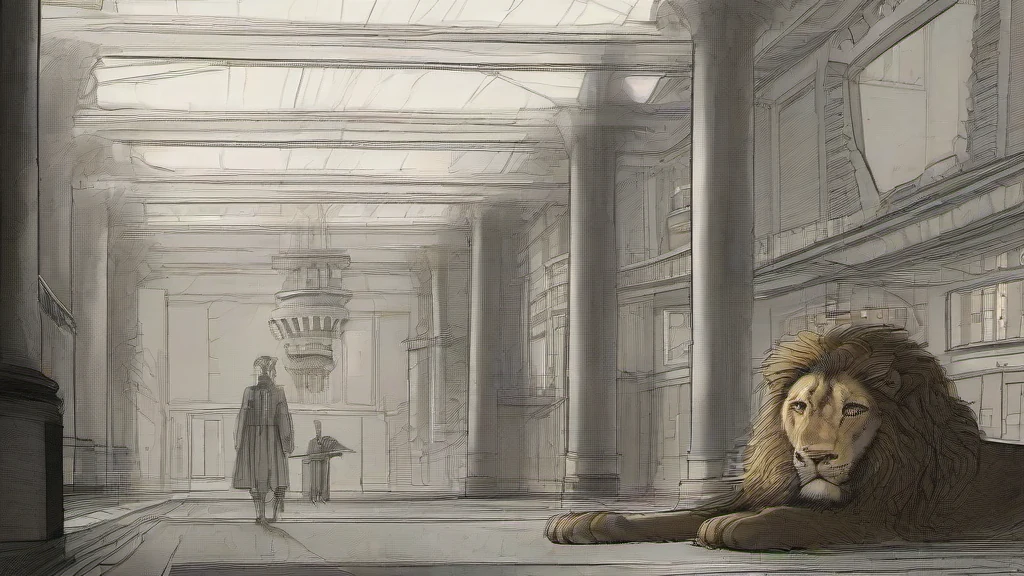
Greta Gerwig’s forthcoming Narnia film, The Magician’s Nephew, has prompted criticism from some Christian commentators and fans. The reaction follows the release of the first trailer and earlier discussion of an Aslan design partly inspired by David Bowie, as well as Meryl Streep’s casting as the lion’s voice. A Change.org petition calling for Gerwig to be removed as director has attracted thousands of signatures, according to the essay published by Reactor.
The essay’s author, a Christian who grew up with C.S. Lewis’s books, argues that the backlash overlooks Gerwig’s interest in the series and her research into Lewis’s work. The author also notes that the Lewis family has praised her “sincere passion” for the books, and says the new film would add another interpretation rather than replace earlier adaptations.
A central part of the essay is the author’s memory of hearing Narnia read aloud by their mother. They describe Aslan’s voice as inseparable from that experience, and say Streep’s casting need not conform to an ideal of a masculine-sounding lion or deity. The piece also recalls how the books introduced the author to talking animals, magic, Greek mythological figures and other fantasy traditions.
The author argues that Narnia has long held a complicated place in Christian culture: some critics have objected to its pagan elements, while others have considered it too Christian. In their view, Lewis combined Christian ideas with folklore, mythology and fantasy, making the books an invitation to imagine beyond familiar religious narratives.
The essay contrasts that expansive reading of Narnia with efforts to restrict how the stories and characters may be interpreted. It presents the series as a place shaped by multiple mythologies and beliefs, and argues that its appeal depends in part on the freedom readers have to make the world their own.
The author says they are looking forward to Gerwig’s The Magician’s Nephew and to seeing what her adaptation adds to Narnia. The piece frames the debate over the film as part of a broader question about whether the fictional world can remain open to different perspectives and audiences.
Sources: Reactor.